


Children often have an imaginary friend, an invisible creature with which they maintain an intimate and personal relationship. Is this phenomenon normal and what is its origin? Let’s decipher together the mysterious world of imaginary friends in children.
The birth of the imaginary friend
The appearance of an imaginary friend can occur around the age of 3, sometimes earlier or later, usually during the early phase of their development. The reasons why children create imaginary friends are varied:
- A need for companionship: For some children, the imaginary friend is a way to alleviate loneliness, especially if they are very young and have not yet developed their social network.
- A way to solve problems: The imaginary friend often brings solutions to the various difficulties encountered by the child. It can also be a strategy to manage their emotions.
- A way to express their creativity: Children have an overflowing imagination, and inventing an imaginary friend can be an excellent way to stimulate their creativity.
- A tool for developing social intelligence: Interactions between the child and their imaginary friend can help the latter better understand human relationships and the functioning of emotions.
The Different Types of Imaginary Friends
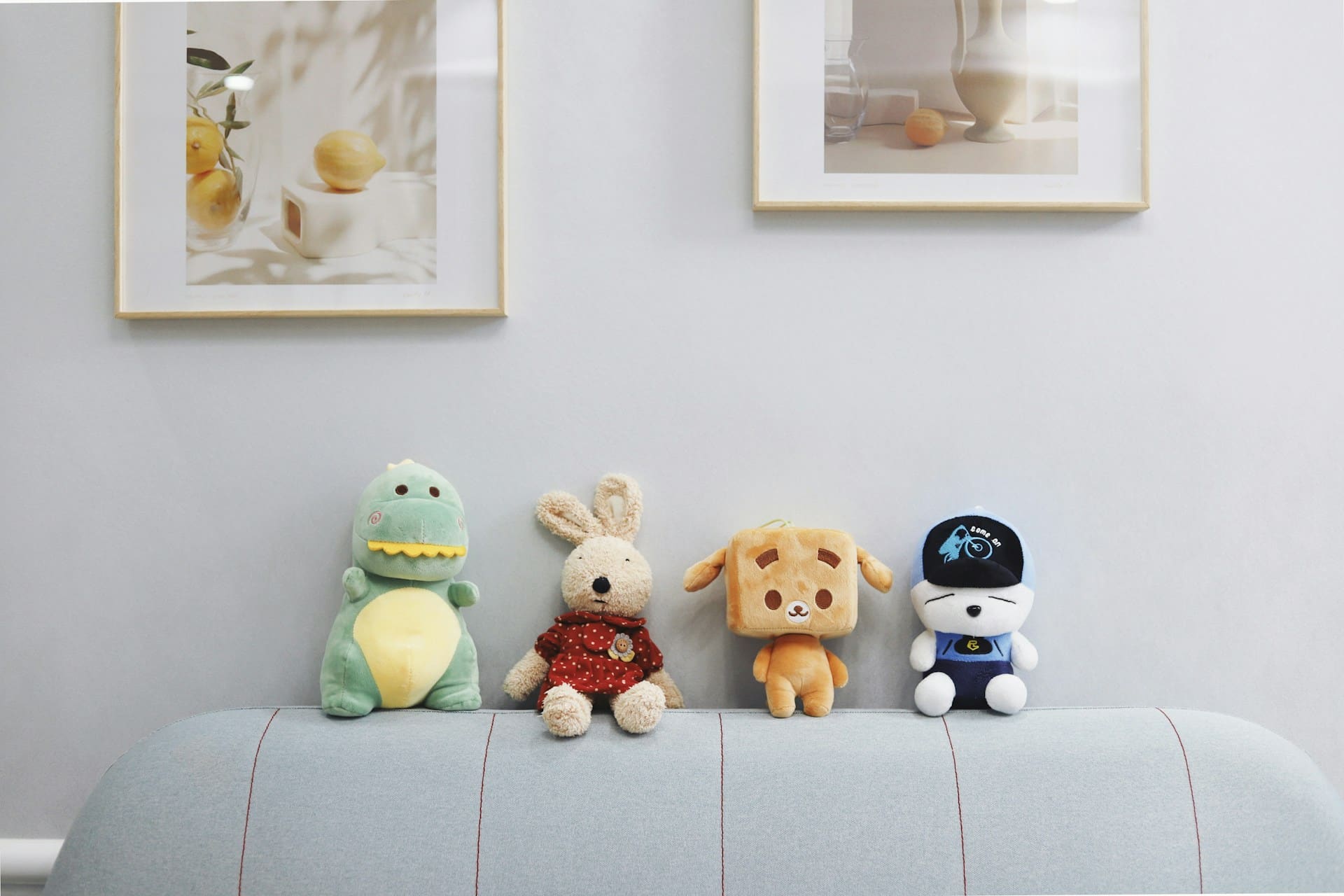
The imaginary friend can take different forms, it can be invisible or manifest through a toy or an object that the child cherishes.
- A fictional character: This could be a superhero, a princess, a pirate, or any other character from the child’s favourite universe. This kind of imaginary friend often accompanies the child in their games and adventures.
- An animal: Some children choose a real or imaginary animal as a friend. This animal may have magical or healing properties that reassure the child when he is sad or sick.
- An alternative version of the child himself: In some cases, the imaginary friend can be an idealized version of the child or represent the version they wish to be.
Can there be multiple imaginary friends?
Yes, it is not uncommon for children to have multiple imaginary friends, each with their own personality, powers and roles in the child’s life. They can coexist at the same time and even interact with each other.
The role of the imaginary friend in child development
Contrary to popular belief, the imaginary friend plays a positive role in a child’s life. Several studies have shown that children with imaginary friends have better self-esteem and a better understanding of their emotions.
Cognitive and Social Intelligence
Interacting with the imaginary friend allows the child to develop their cognitive and social skills. The conversations they have require a capacity for reflection and understanding of language, while the stories they live together teach moral values and the rules of life in society.
Creativity
By inventing imaginary friends, children stimulate their imagination. They position themselves as narrators or protagonists in a world where anything is possible, and thus develop their creativity and their problem-solving abilities.
Autonomy
The imaginary friend can also help the child confront their fears. Facing a distressing situation, they can rely on their imaginary friend to reassure them and help find solutions. This contributes to the development of autonomy and self-confidence.
Parents facing imaginary friends
How to react?
When faced with this invisible friend, parents must keep in mind that this phenomenon is normal and beneficial for the child. It is important to listen to and respect the child’s imaginary world without judging it, but without giving it too much importance either.
Avoid pretending to believe in it and don’t give it too much room either. For example, there is no need to offer it a snack at the same time as your child or to give up your place at the table for it. Similarly, don’t talk about it if your child doesn’t bring it up themselves. On the other hand, if they do talk about it, you can bounce off and ask them to tell you about their imaginary friend. This is a way to learn more about your child.
Another important point, if your child asks you if you can see them, do not lie and clearly tell them no.
Should we be worried?
In most cases, there is no reason to worry: the imaginary friend is a sign of healthy intellectual and emotional health. However, if your child prefers to play with their imaginary friend than with children in real life, if this causes relational problems with other children, or if the imaginary friend becomes so intrusive as to disrupt daily life, it may be necessary to consult a professional, such as a psychologist or pediatrician.

When do imaginary friends disappear?
There is no specific age when imaginary friends disappear, as each child develops differently. Generally, they begin to fade around the age of 7, when the child enters primary school and begins to develop real friendships.
The role of parents in the transition
Parents can help their child navigate this transitional period by emphasizing real social relationships. By encouraging interactions with their peers and extracurricular activities, parents provide the child with new opportunities to create memories and experiences with real friends.
Paul L. Harris and Imaginary Friends
The psychologist Paul L. Harris has studied the topic of imaginary friends in children and concluded that these invisible creatures are an integral part of a child’s psychological development. Therefore, they can be considered as genuine support for the child’s development, both on a cognitive and emotional level.
The imaginary friend is an essential and benevolent companion for the child, allowing them to live extraordinary adventures while developing their personality and social skills. Parents are encouraged to welcome this with kindness, or even to join their child in this fantastic universe.