

On the occasion of NYC Design Week (from May 17 to 28, 2023), six rare models of Akari lamps are displayed and sold in the United States, in the store of the Noguchi Museum in Long Island City (New York). This is an opportunity to revisit these fascinating luminous sculptures, true icons of 20th century design, fruits of the imagination of a prolific artist and the ancient Japanese know-how in crafts. Poetic lamps to which Isamu Noguchi devoted 30 years of his life and whose unique light still soothes so many homes around the world.
The “Akari” lamps, referencing light and a certain idea of weightlessness, are actually much more than lamps. These luminous sculptures, a homage to Japanese culture, are thus the perfect combination of functional characteristics and Japanese aesthetics. Durable, even though delicate, easy to use while being the result of complex craftsmanship, the Akari lamps are entirely handmade. A veritable goldsmith’s work, yet widely disseminated. These contrasting creations, which must be admired in the dim light to fully grasp their beauty, have been delighting design enthusiasts in search of minimalism and serenity for decades. Lovers of simplicity and naturalness, like designer Pierre Chapo who was, in fact, displaying the Akari in his workshop-store as early as the 1950s, the time of creation of the first models.
The Akari lamps, fruits of ancestral craftsmanship in Japan
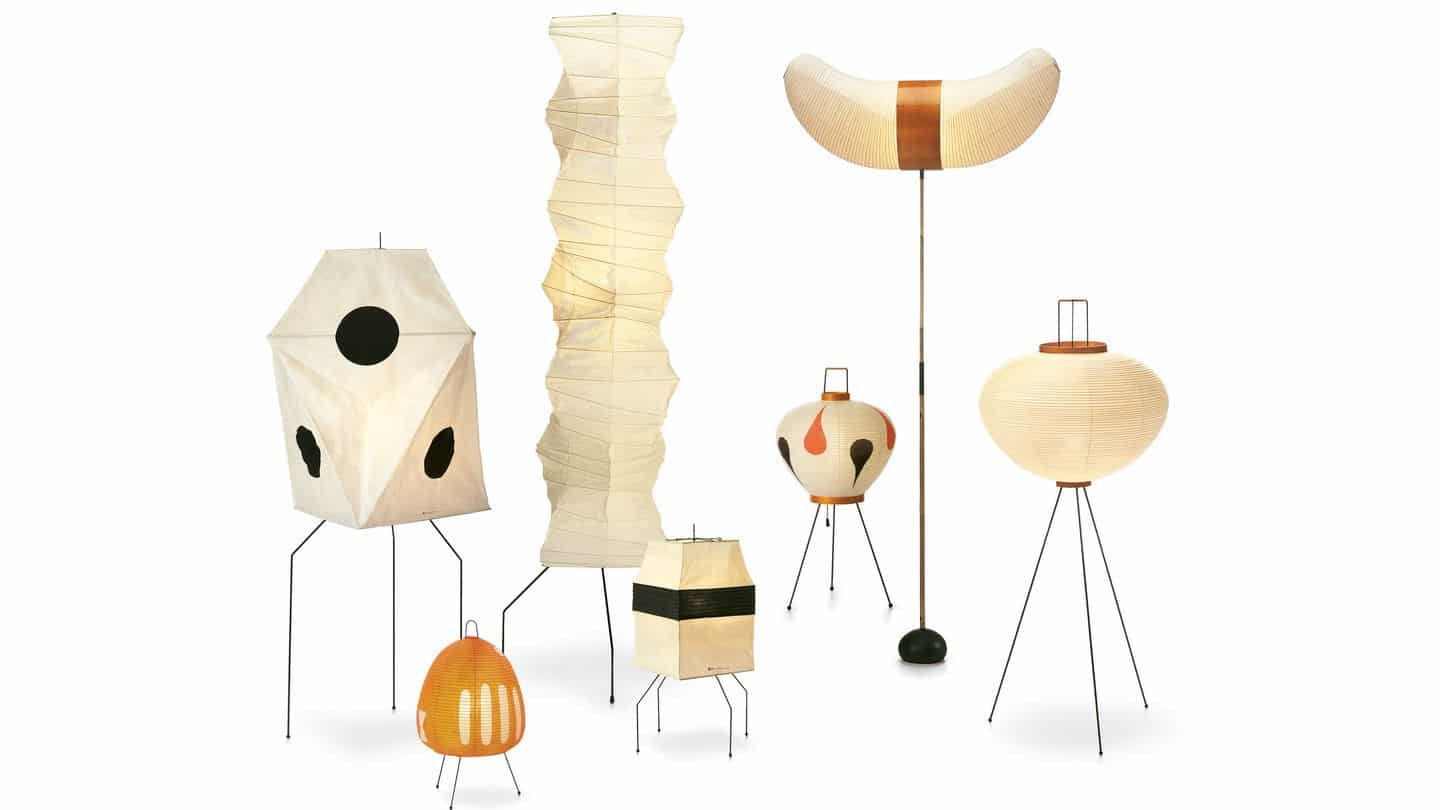
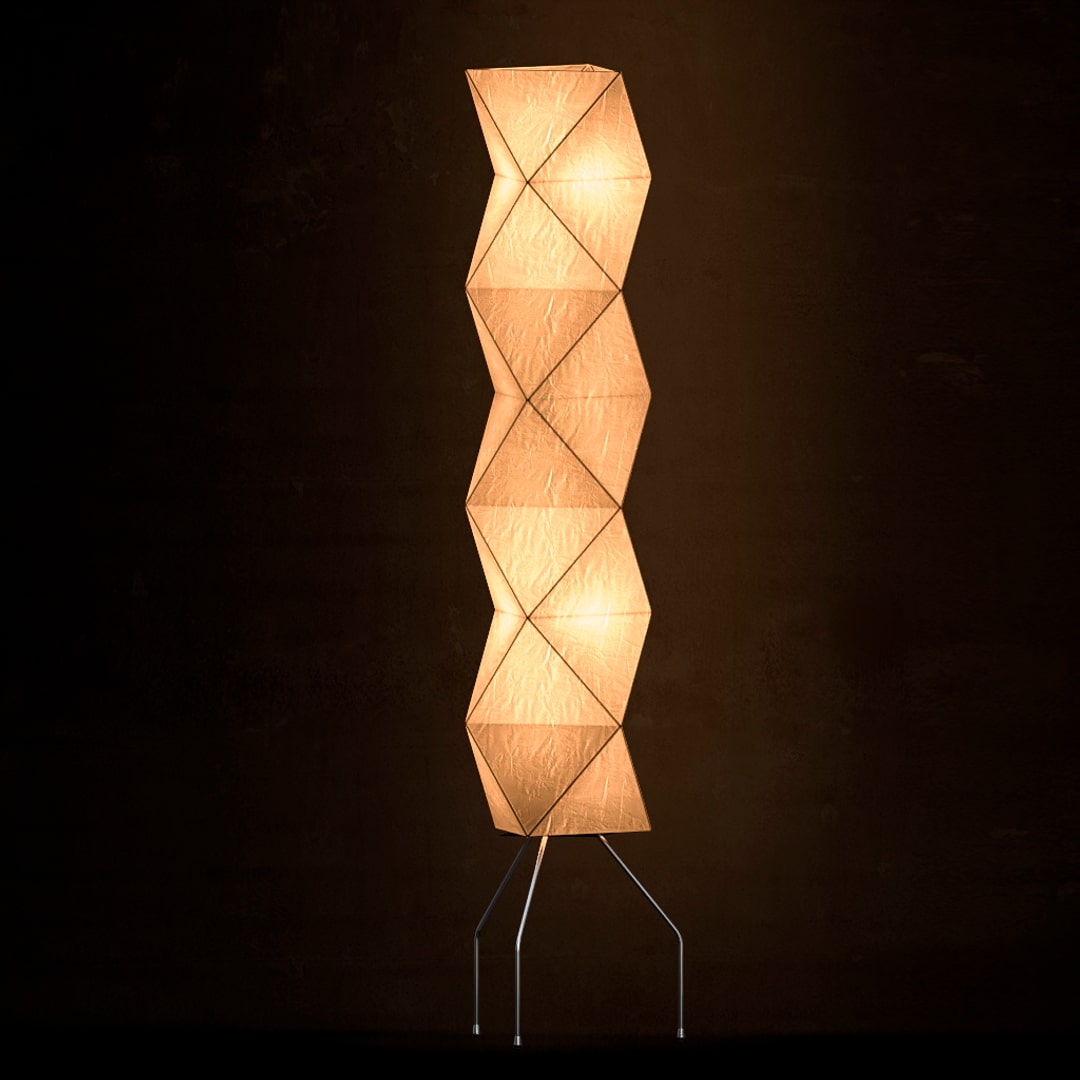
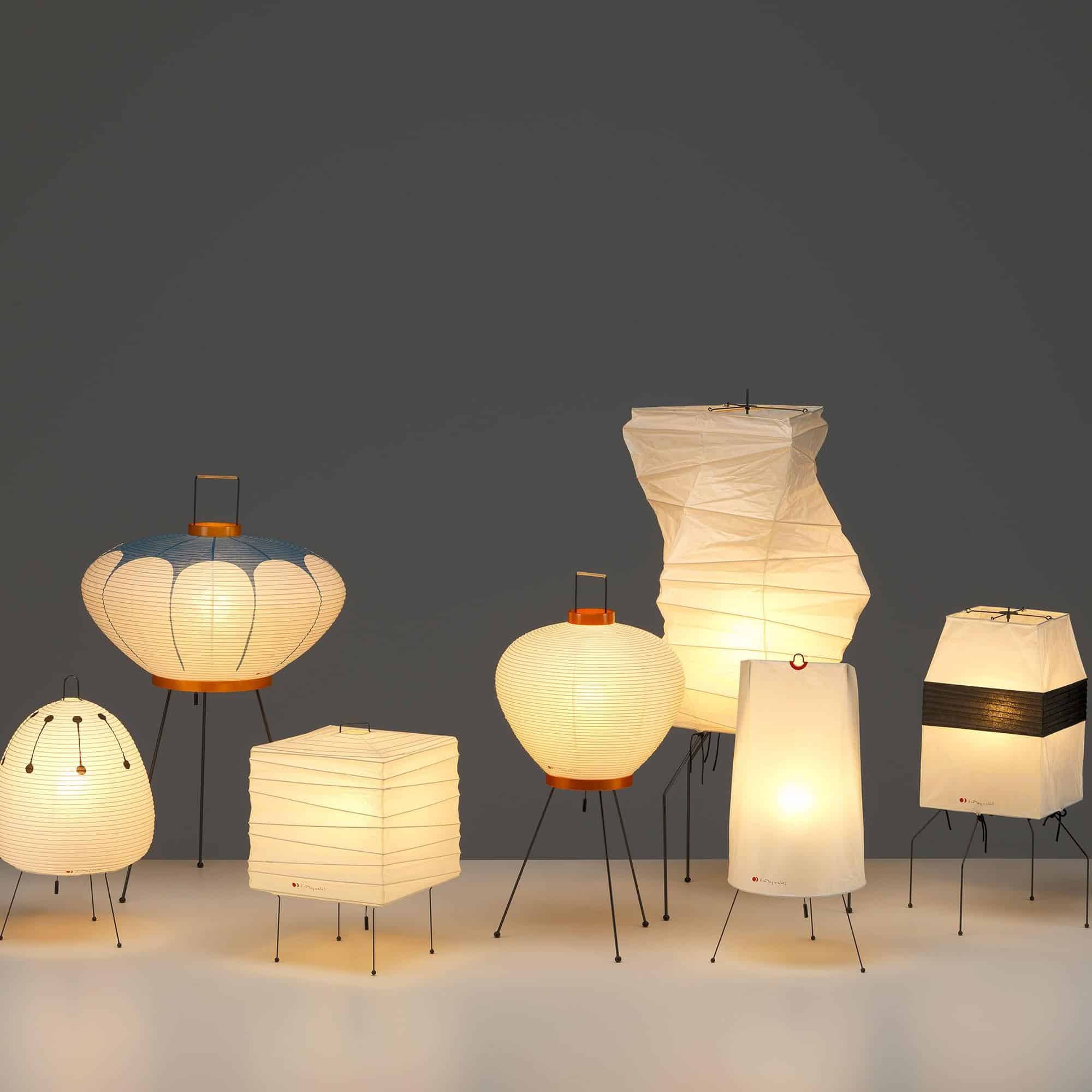
If the Akari lamps continue to fascinate, it is perhaps also because they seem, all together, to form an as yet undecipherable repertoire, a kind of alphabet of light expressed in columns, double horns, spheres, cubes, pyramids, helixes, twists… Models with shapes as complex as they are refined, which a simple glance cannot fully grasp; and yet, the essential message comes through immediately: a feeling of peace as soft as the dimmed light diffused by each Akari. A soothing and delicate glow, which could be compared to that precise hour when the day subtly gives way to the night, and which is reminiscent of the light emitted by Japanese lanterns. Lanterns which, like the Akari lamps, owe their lightness and transparency to washi paper, an ivory-colored mulberry sheet. This traditional Japanese paper, handcrafted for over 1300 years, is known for its flexibility and longevity. Washi paper thus resists remarkably well to folds and tears.
First presented in 1952 at the Kamakura Museum of Modern Art, the Akari lamps come to life thanks to the traditional manufacturing methods of bamboo lanterns and umbrellas, a specialty of the city of Gifu, Japan. It was a place visited by Isamu Noguchi in 1951, where Ozeki & Co, a manufacturer to which the artist entrusted the production of his Akari sculptures, is located. The company continues to produce the lamps by hand for over half a century now, following the initial production methods. Each model is therefore entirely handmade, made from strips of washi paper glued onto bamboo ribs previously stretched over sculptural wooden supports. Once the glue has dried and the shape of the lamp is fixed, the inner framework is folded, leaving only the flexible paper of the Akari lamp which can be folded flat for easy shipment.
Isamu Noguchi, artist between tradition and modernity
With these Akari lamps, Isamu Noguchi strives to harmonize tradition and modernity, by allowing models created using ancient techniques to be distributed worldwide. A feat that the artist, son of an American writer mother and a Japanese poet father, has relentlessly renewed in most of his repertoire, pushing the possible limits in terms of manufacturing. The result is subtle works, whose apparent fragility hides a solidity capable of withstanding a worldwide expedition.
Isamu Noguchi was passionate about spreading Japanese aesthetics and Zen culture to as many people as possible. Turning on an Akari at home is thus not just about illuminating a simple lamp, it’s about bringing a luminous sculpture to life, from which emanates a great sensitivity. For, each model born from the artist’s imagination, also takes shape under the hands of a Japanese craftsman devoted body and soul to his craft. The Akari lamps thus remind us of everything that precedes our coming into the world: people who, after spending countless hours over a workbench, pass on their knowledge to the next generations. Men who, driven by a strong desire to create, strive towards an ideal. How can one not be moved, then, by the deep humanity that emanates from an Akari sculpture?
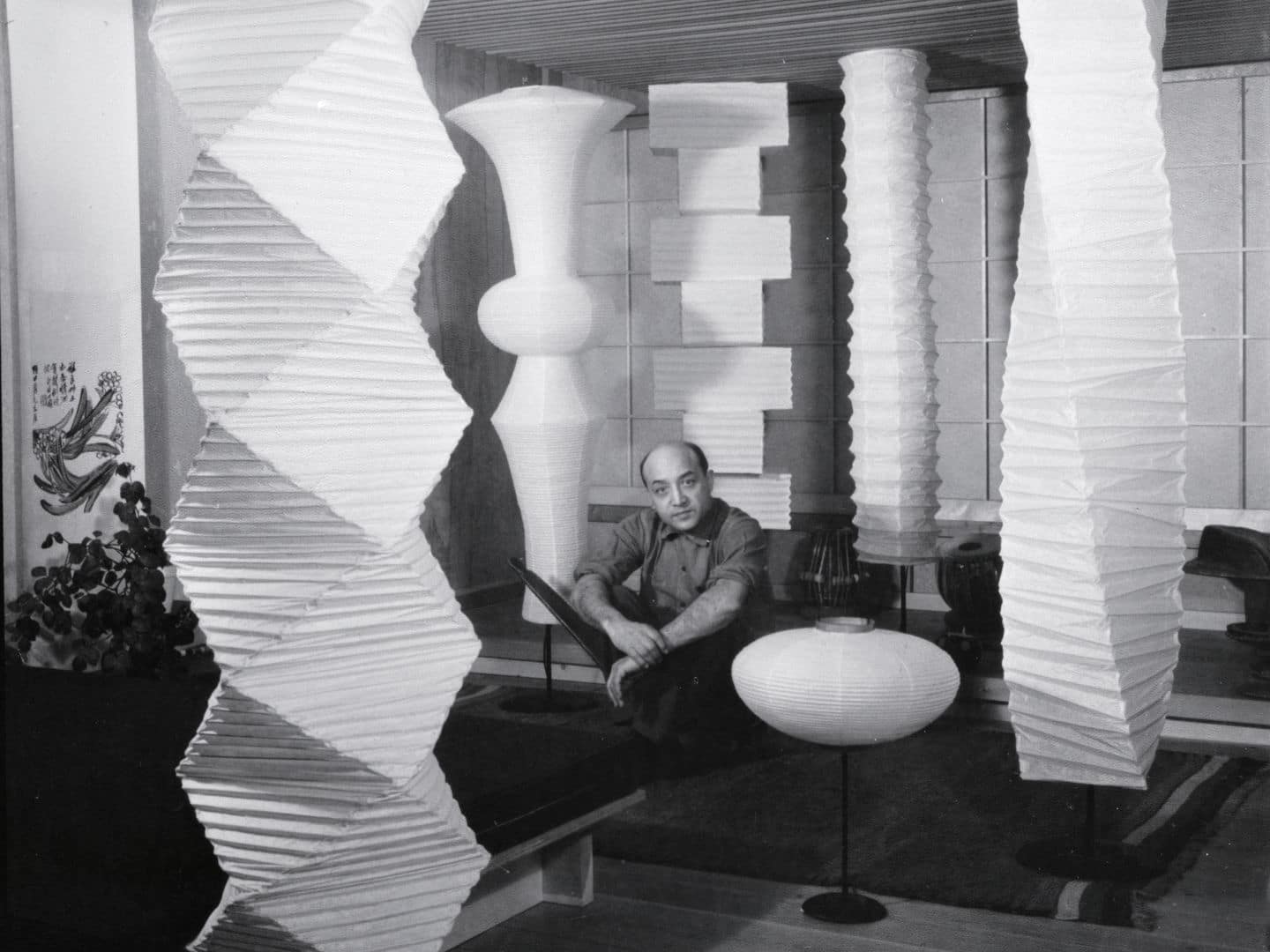
Isamu Noguchi
Isamu Noguchi
Isamu Noguchi
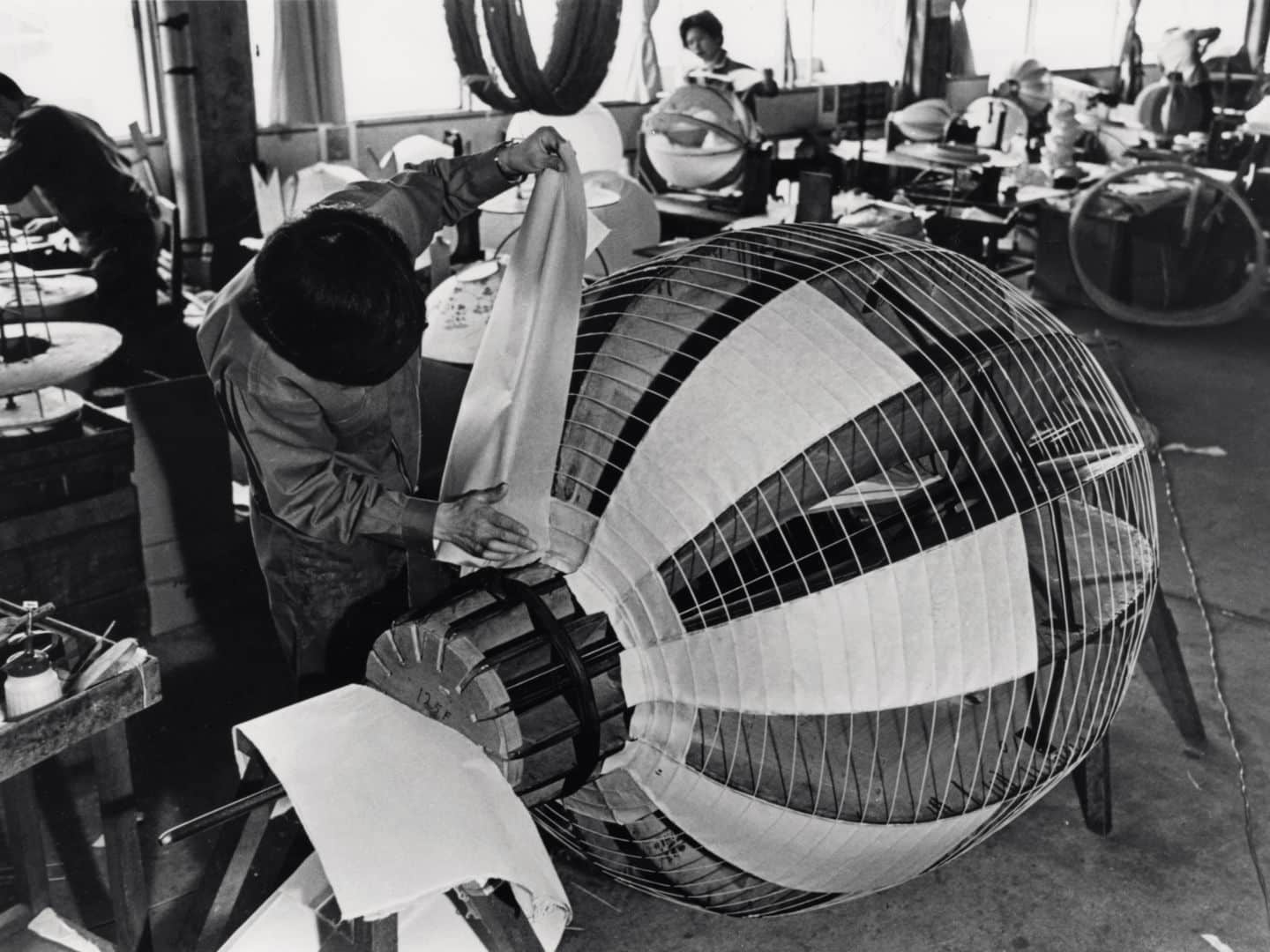
Isamu Noguchi, who died in 1988 at the age of 84, left behind nearly 240 Akari lamp models. The artist even stated that “what is beautiful in a garden is not each element, but the relationship between the elements. What’s even more important is that there is space, man and time. A man has to walk in it with his feet to discover it.” A sentence pronounced on the occasion of the inauguration of the UNESCO house in Paris (1956), which perfectly sums up Isamu Noguchi’s philosophy, who was in charge of creating a Japanese garden there. A contemplative Eden between tradition and modernity, which must be experienced to truly understand its essence. Just like this Zen garden, you will have to turn on an Akari lamp yourself to fully feel the tranquility it brings. Models now produced by Vitra, which continue to enchant interiors worldwide with their soft light and discreet elegance, testaments to the visionary legacy of Isamu Noguchi and his gentle poetry, which the world so desperately needs.