


The beginning of spring is a crucial time for the development and growth of your plants in your garden. Proper watering is essential to ensure a moist and fertile soil that promotes seed germination and the growth of young shoots. However, there are certain mistakes to avoid when it comes to watering your garden. In this article, we will present the four most common mistakes to avoid when watering your garden at the beginning of spring.
Error 1: Over-watering
Overwatering is one of the most common mistakes made by amateur gardeners. It’s easy to think that a constantly moist soil is beneficial for plants, but in reality, it can cause several problems:
- A lack of oxygen in the soil
- The development of fungal diseases
- The formation of mold and rot
- The death of the roots
To avoid this error, it is important to know the specific water needs of each plant in your garden. In general, a less frequent deep watering is preferable to daily superficial watering. Using a rain gauge or simply observing the soil and the weather will help you determine when to water your garden.
[bzkshopping keyword=”pluviometre”]
Error 2: Watering at the wrong time of day
Watering your garden at any time of the day may seem inconsequential, but it is actually essential to choose the right time to water your plants. The best time to water your garden is early in the morning or late in the evening, when the temperatures are cooler and evaporation is reduced.
Bad times to water:
- The afternoon: The warm temperatures coupled with strong sun exposure lead to rapid water evaporation. This means that less water actually reaches the roots of the plants, thereby wasting water while not providing the necessary hydration to the plants.
- Night: Although temperatures are also cool at night, a damp ground combined with low light promotes the development of fungal diseases on plant leaves and stems. Watering just before sunset allows the water to soak into the ground overnight, while leaving enough time for the leaves and stems to dry before nightfall.
In order to improve the efficiency of watering and better manage your time, consider using an automatic watering system or timers to schedule watering at optimal times.
[bzkshopping keyword=”arrosage automatique”]
Error 3: Poor Water Distribution
Ensuring a balanced and uniform distribution of water is crucial for maintaining the good health and growth of your plants. A poor water distribution can lead to areas oversaturated with water and other areas that are too dry, thus endangering some plants for various reasons.
Techniques to improve water distribution:
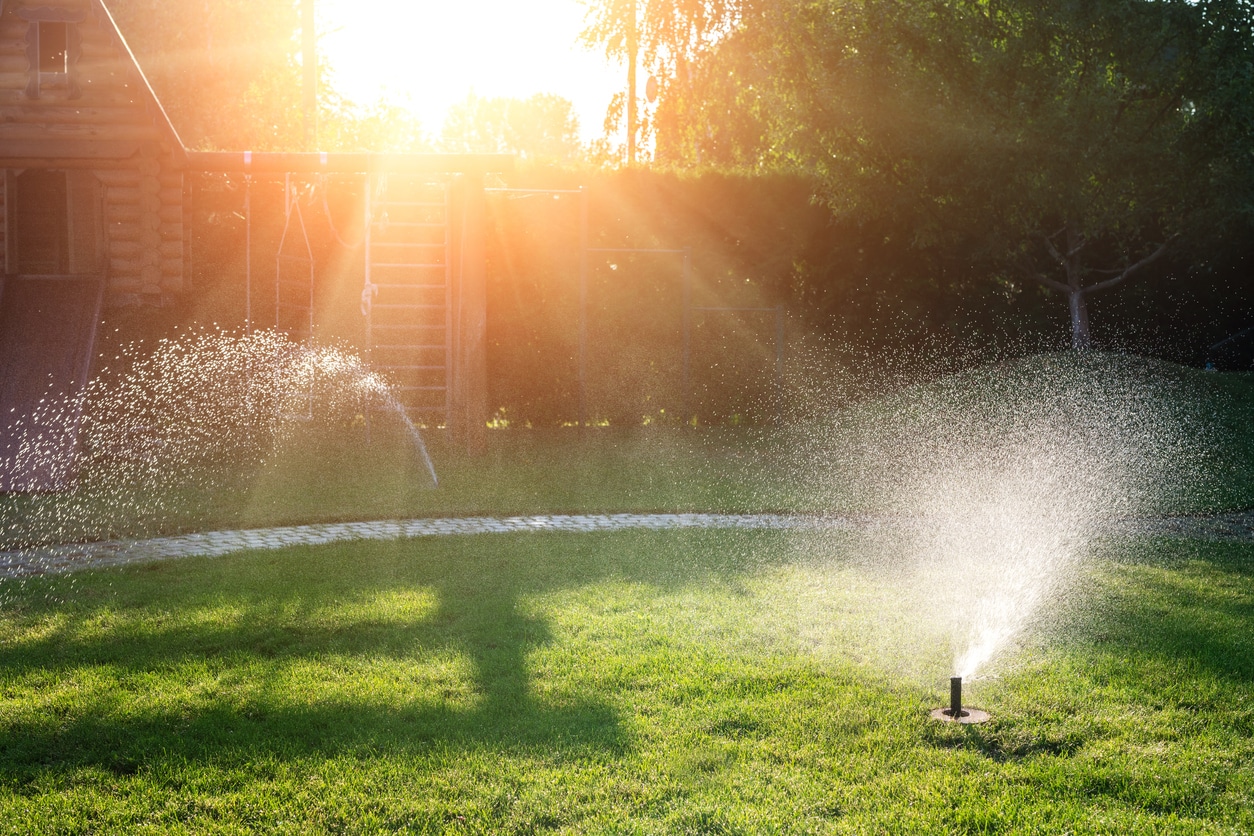
- Using a sprinkler: A well-placed sprinkler allows for uniform and efficient watering of the desired areas of your garden, without wasting water or creating excessive puddles.
- Water carefully by hand: If you prefer to manually water your garden, make sure to control the water flow of your hose or watering can and regularly and systematically cover each plant. Moreover, avoid directing the water directly onto the leaves and instead prioritize the base of the plant to encourage better absorption by the roots.
- Practice mulching: Applying a layer of mulch (straw, wood chips, etc.) at the base of plants helps retain soil moisture, thus preventing rapid water evaporation while protecting the roots from temperature fluctuations. Mulch also acts as insulation against the wind, thereby reducing evaporation caused by exposure to wind.
Error 4: Ignoring Rainwater Harvesting
The rainwater is a precious and natural resource that can be used to water your garden. Ignoring this resource not only leads to water wastage, but also a greater environmental impact linked to the usage of potable water for irrigation.
- Collecting rainwater: Installing rainwater collection devices such as tanks or containers connected to your house’s gutters allows you to collect excess water to use for watering your garden. This method is economical and environmentally beneficial for the environment.
- Optimize irrigation: Use the techniques mentioned above to optimize the use of rainwater in your garden. For example, water deeply rather than superficially, and water early in the morning or late in the evening to minimize evaporation.
- Adapt the choice of plants: Choosing plants that are adapted to local conditions and climate not only helps reduce the water needs of your garden, but also facilitates its general maintenance by limiting the use of other resources.