
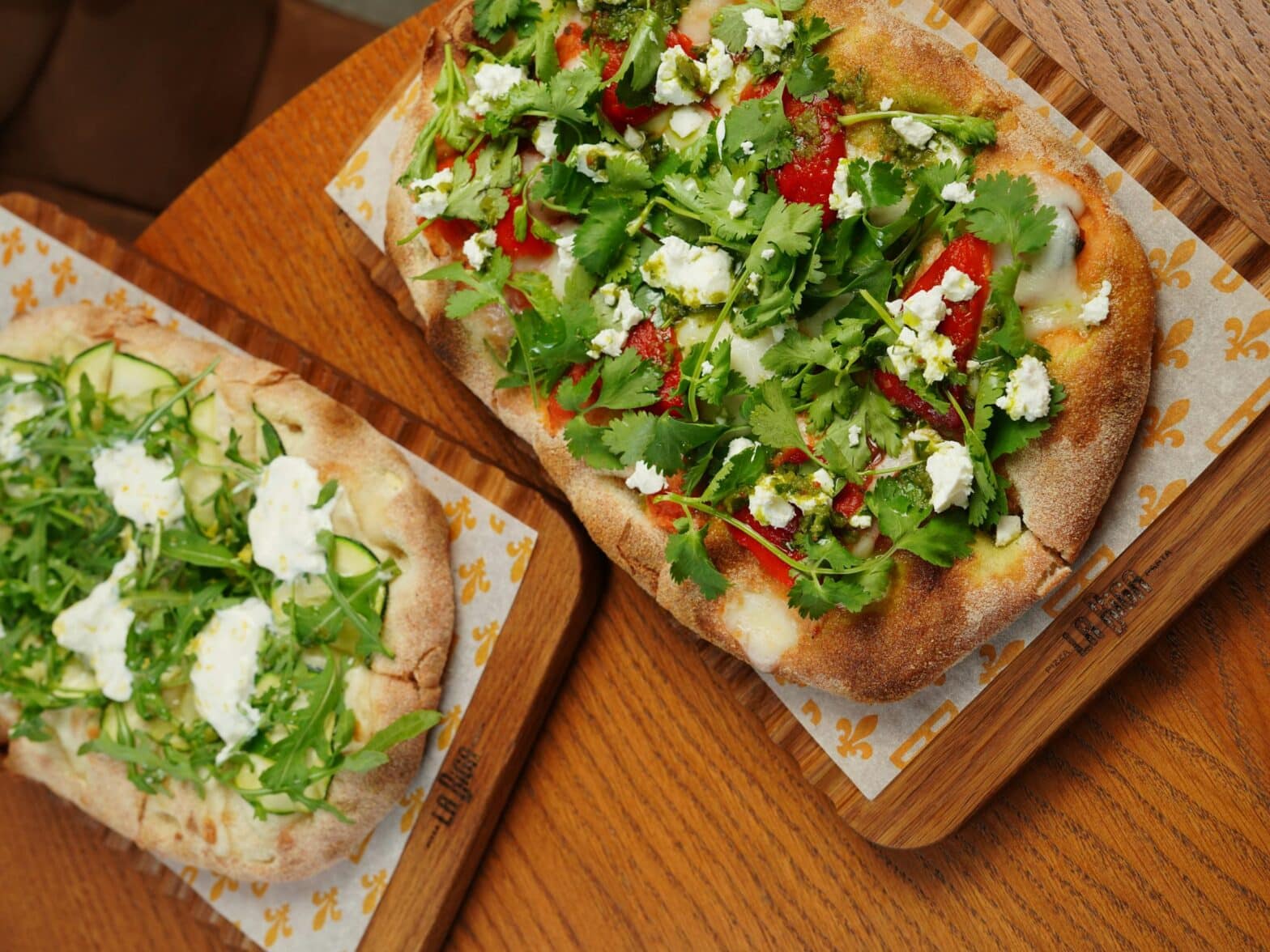

In the world of Italian gastronomy, two staples often share the spotlight: the pizza and the pinsa. Although similar at first glance, these two dishes have features that distinguish them both in terms of taste and preparation. In this article, we will explore the differences between pizza and pinsa, as well as some quick and easy pinsa recipes.
The origin and influence on creation
Pizza, originally from Naples, is widely recognized as one of the most popular dishes worldwide. Its base consists of a thin crust made from soft wheat flour, water, yeast, and salt. The traditional topping includes tomato sauce, mozzarella, fresh basil, and olive oil. Of course, nowadays, pizza comes in a multitude of varieties, catered to individual tastes and preferences.
The pinsa, on the other hand, originates from ancient Rome and gets its name from the Latin word “pinsere” which means “to stretch”. Composed primarily of cereal flours (generally a mix of wheat, soy, and rice), the dough of the pinsa is also less elastic than that of the pizza and has a slightly different, more rustic taste. The topping is generally lighter and places more emphasis on the flavors of the ingredients.
The composition of the dough: flours and fermentation process
Among the essential differences between these two Italian preparations are the composition of their respective dough and their method of fermentation. Indeed, contrary to classic pizzas, pinsas are made from a specific blend of flours. Composed mainly of the mix of cereals mentioned earlier, their dough is both more digestible and crispier than that of pizzas. Another distinctive element is the fermentation period granted to the dough; while a pizza dough can sometimes be used after just a few hours of rest, pinsa dough must ferment for a period of up to 48 or 72 hours depending on the recipe. This period allows the dough to be both airier and lighter while remaining crispy.
The Shaping and Baking
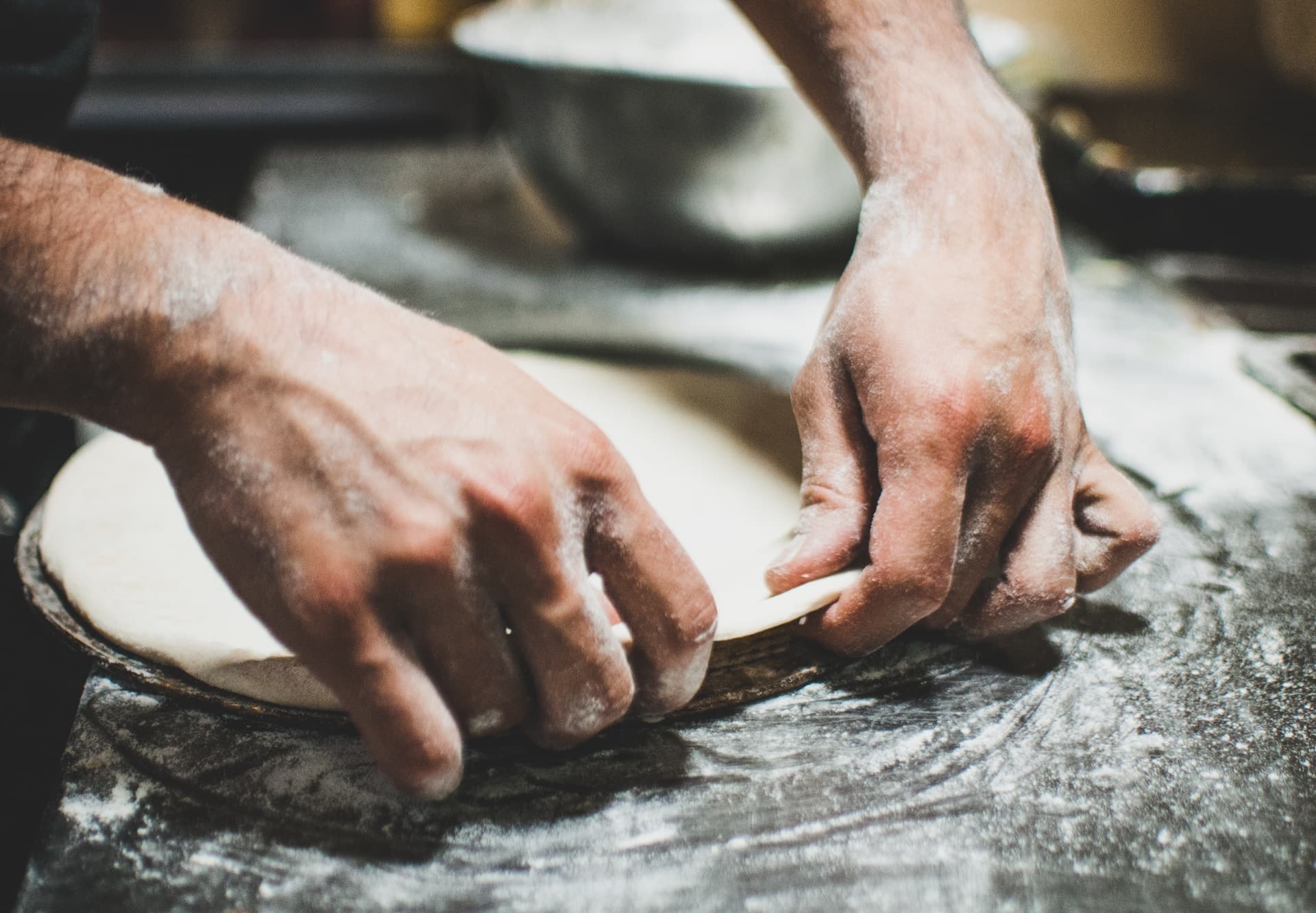
At first glance, it may be difficult to distinguish a pizza from a pinsa, as their appearance is very similar. However, the way they are shaped is significantly different. Pinsa dough is generally not worked into a circle but rather into an oval or rectangular shape depending on the region of Italy from which it is inspired. This is partly explained by the difference in consistency between the two doughs: the pinsa being less elastic, it is more difficult to work it into a round shape.
The cooking process also distinguishes these two preparations. Traditional pizza requires quick cooking at very high temperature (about 400°C for a few minutes) in a wood oven to obtain a crispy but soft inside base. On the contrary, the pinsa requires a longer cooking time at a lower temperature, usually around 300°C, to enhance the flavors of the ingredients while guaranteeing its characteristic texture.
Three quick and easy pinsa recipes
Pinsa with Grilled Vegetables
Spread your pinsa dough and generously top it with grilled vegetables such as zucchini, eggplant or peppers, seasoned with extra-virgin olive oil, salt, pepper and aromatic herbs. Finish with thin slices of mozzarella and bake until the surface is golden and crispy.
[bzkshopping keyword=”mozzarella”]
Pinsa with Parma ham, arugula and parmesan
Cook your pinsa dough without toppings for a few minutes. Once out of the oven, arrange delicate slices of Parma ham over the entire surface, then add a generous handful of fresh rocket and parmesan shavings. Drizzle a stream of extra virgin olive oil to accentuate the flavors.
[bzkshopping keyword=”parma ham”]
[bzkshopping keyword=”parmesan”]
(Note: the provided text does not contain any French words that need to be translated into English. It contains an HTML tag with an embedded shortcode. Therefore, it’s already in English.)Pinsa with smoked salmon and dill
Roll out your pinsa dough and top it with a thin layer of crème fraîche seasoned with salt, pepper, and chopped dill. Cover everything with slices of smoked salmon and a few rings of red onion, then bake until the pinsa is nicely browned and crispy. Once cooked, add a few capers and quarters of lemon before enjoying.
[bzkshopping keyword=”capers”]