


In a world where everything is moving at a hundred miles an hour, the idea of taking one’s time at the table seems almost utopian. Yet, a simple change in our eating speed could well be the key to better health and a slimmed-down figure.
This is what an American study published in the Journal of the Academy of Nutrition and Dietetics reveals, highlighting the unexpected benefits of eating slowly. The finding is clear: slowing down the rate at which we eat does not only help us to consume less, but also improves our feeling of satisfaction. But the benefits do not stop there.
Small or large bites

The study was conducted by a team from Texas Christian University with the participation of two groups of 30 people: a group of individuals whose weight is considered “normal” and a group of people who are overweight or obese.
The two groups first had to have a meal with the instruction not to hurry, to take small bites and chew well. On another meal, the two groups ate the same dishes but this time took substantial bites and swallowed quickly. In both cases, participants had the option to eat as much as they wanted.
The results of the study showed that on average, people who ate quickly consumed more food than those who ate slowly. The people in the group eating slowly also reported feeling more satisfied at the end of the meal than their counterparts in the group eating quickly. Furthermore, people from both groups reported enjoying their meal in the same way, whether they eat slowly or quickly.
These results suggest that taking the time to enjoy a meal can help people eat fewer calories and feel more satisfied at the end of the meal. This has important implications for weight control, as eating more slowly allows individuals to recognize when they are full and stop eating before overindulging.
A feeling of fullness that lasts longer, but not only that

The researchers found that the participants ate less and consumed fewer calories when they ate slowly (88 fewer calories for the normal weight group and 57 fewer calories for the overweight group, on average). All participants reported feeling satisfied for longer and were less tempted to snack after eating slowly.
If the study was conducted on a small number of participants, WebMD reminds us that it “allows people who want to keep their figure to learn important lessons“, adding: “It is sometimes difficult to find the time to eat properly during a busy day, but wolfing down a sandwich at your desk is not the best way to keep control of your weight.” No kidding?
Eating slowly has positive repercussions far beyond the table. This habit has the potential to improve our digestion, reduce the risk of gastric reflux and ensure better blood sugar regulation. In addition, it contributes to better heart health and the prevention of certain metabolic diseases.
But then, how to slow down the pace when eating?
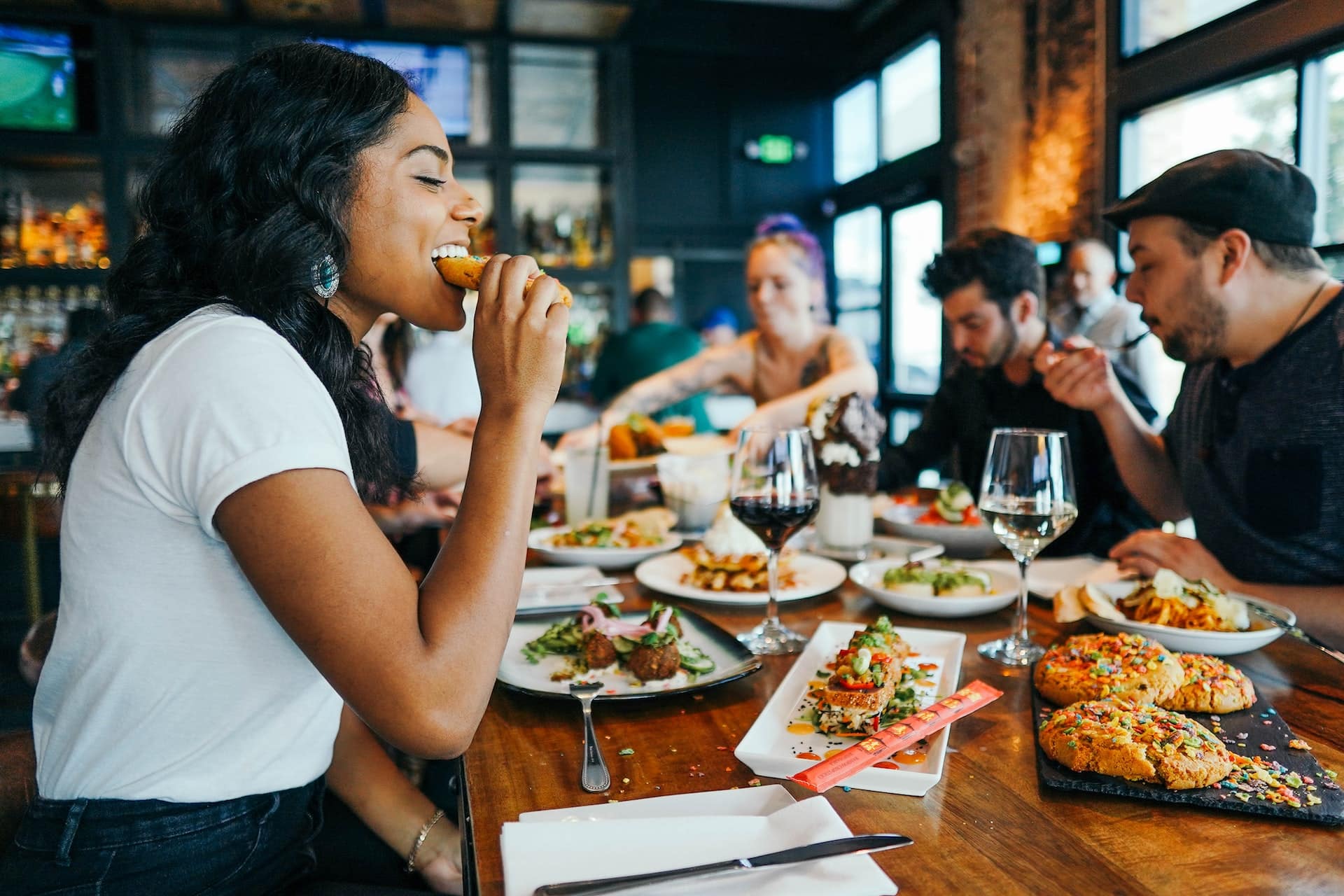
Adopting a slower pace at the table seems simple on paper, but in reality, it can be confusing at first as habits are hard to change. However, some simple tips can help ease this transition: put your cutlery down between each bite, chew slowly, and don’t hesitate to take breaks to drink water. Another tip: turn off any screens during your meals so that you are focused on the content of your plate. Indeed, watching TV or your smartphone tricks your brain, which does not immediately realize it is eating. The goal is to transform the meal into a moment of pleasure and relaxation, rather than a simple biological necessity.
So, the next time you find yourself devouring your lunch at your desk, remind yourself that you’re not only being rude, but also wasting calories. Eating slowly should not be perceived as a constraint, but rather a conscious choice in favor of a more balanced life.
Instead, take a few minutes to enjoy your meal and you will be doing yourself a favor, body and soul. So don’t rush … slow down and enjoy your meal!